




Why education technology is at a genuine turning point in 2026
Efficacy
The first is the efficacy imperative around AI. The first wave of edtech AI was features for their own sake — a chatbot bolted onto a course, `AI-powered` on the landing page. In 2026 the questions from schools, districts, and procurement have shifted to proof: does this measurably improve a learning outcome, and can you show the evidence? That changes what you build. An AI feature in education needs to be instrumented from day one — you have to capture what the learner did, what the model suggested, and what happened next, or you have no way to answer the efficacy question that now decides the sale.
Compliance
The second, generic vendors skip entirely, is the compliance and accessibility load. Education software handles children's and students' personal data, so it sits under real law — FERPA and COPPA in the US, the DPDP Act in India, GDPR where EU learners are involved — and accessibility isn't a nice-to-have but frequently a legal requirement (WCAG 2.2 AA, Section 508, ADA). These aren't checkboxes you add at the end. They shape your data architecture, your consent flows, and your front-end from the first sprint.

What actually changes when you build for education
Integration with the systems a school already runs
No school or serious edtech operates in isolation — there's a learning management system (Canvas, Moodle, Google Classroom) and often a student information system holding rosters and grades. The reason products stall in pilots is usually integration, not features. The standard that solves it is LTI (Learning Tools Interoperability) from 1EdTech — building to LTI 1.3 means your tool launches inside the LMS the teacher already uses, with single sign-on and grade pass-back, instead of asking them to adopt yet another login. If you build a beautiful platform that can't speak LTI, you've built something a school has to work around rather than with.
Accessibility as an architecture decision, not a coat of paint
Meeting WCAG 2.2 AA — proper semantic markup, keyboard navigation, screen-reader support, sufficient contrast, captioned media — is dramatically cheaper when it's designed in than when it's audited in at the end. In education it's also frequently non-negotiable for public-sector buyers. We build to it from the component level, because a `we'll make it accessible later` plan is how you end up rebuilding your entire front end.
Student-data privacy in the data model.
Handling minors' data well means data minimization (don't collect what you don't need), clear consent and parental-consent flows where COPPA applies, role-based access so a teacher sees their class and not the whole district, and auditability of who accessed what. This is the same discipline that governs regulated fintech work — and it's exactly the stance we bring from building for audited, compliance-heavy clients: correctness and traceability beat cleverness when a wrong record has real consequences.
Mobile that works in real conditions
A learning app isn't used in a lab. It's used on a mid-range Android phone, on a patchy connection, by a student who has twenty minutes on a commute. That means offline-first design — cache the lesson, let them make progress, sync when the connection returns — and a light footprint, not a heavy app that assumes flagship hardware and campus wifi. Building this on React Native lets one codebase serve iOS and Android without doubling the team, which for an education budget is often the difference between shipping and not.
Education work we've delivered

A clearer way for clients to explore advisory services and investment solutions.
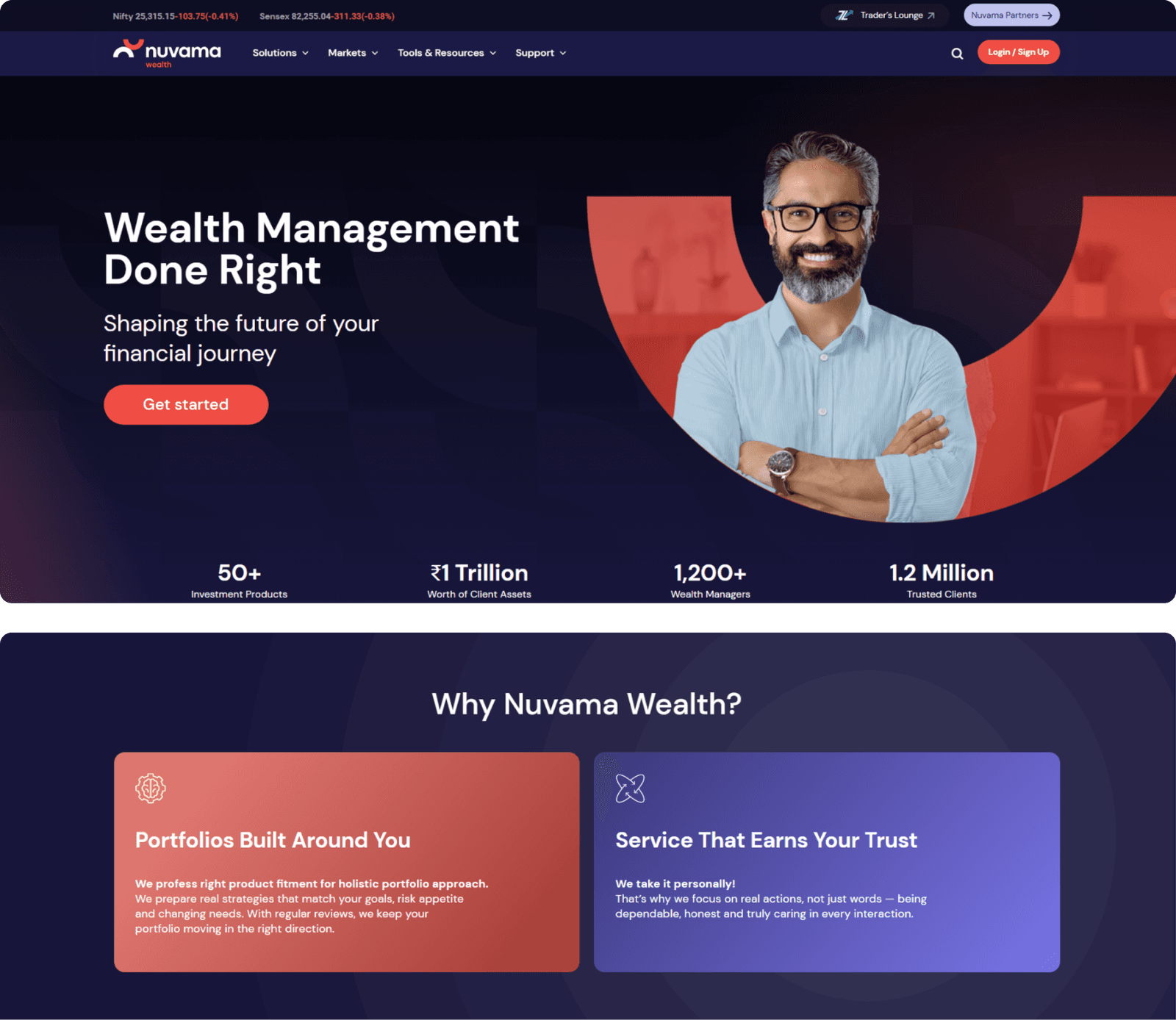
What we did for Nuvama Wealth
 Structured service architecture for advisory offerings
- Separate advisory and portfolio sections
- Research listings organised for quick scanning
- Clear adviser contact routes on every page
- Office network presented by region
- Responsive layouts across desktop and mobile

Presenting a full spend management and payments suite to Indian finance teams.
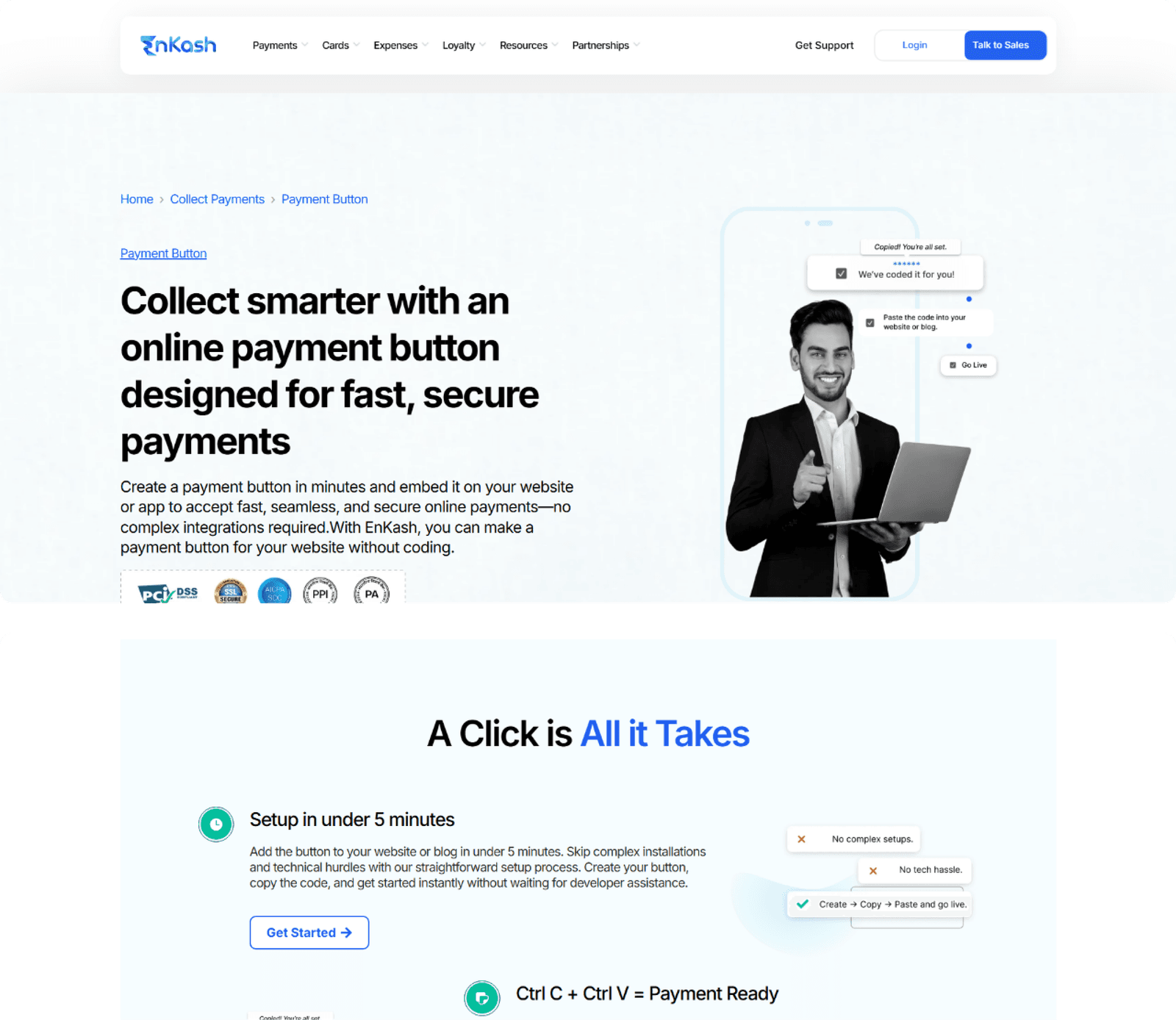
What we did for Enkash
- Product suite split into separate pages
- Solution routes organised by business role
- Corporate cards and expense pages structured clearly
- Payables and collections given dedicated sections
- Demo requests reachable from every screen
- Responsive layouts across desktop and mobile
Education Solutions Built for Your Industry
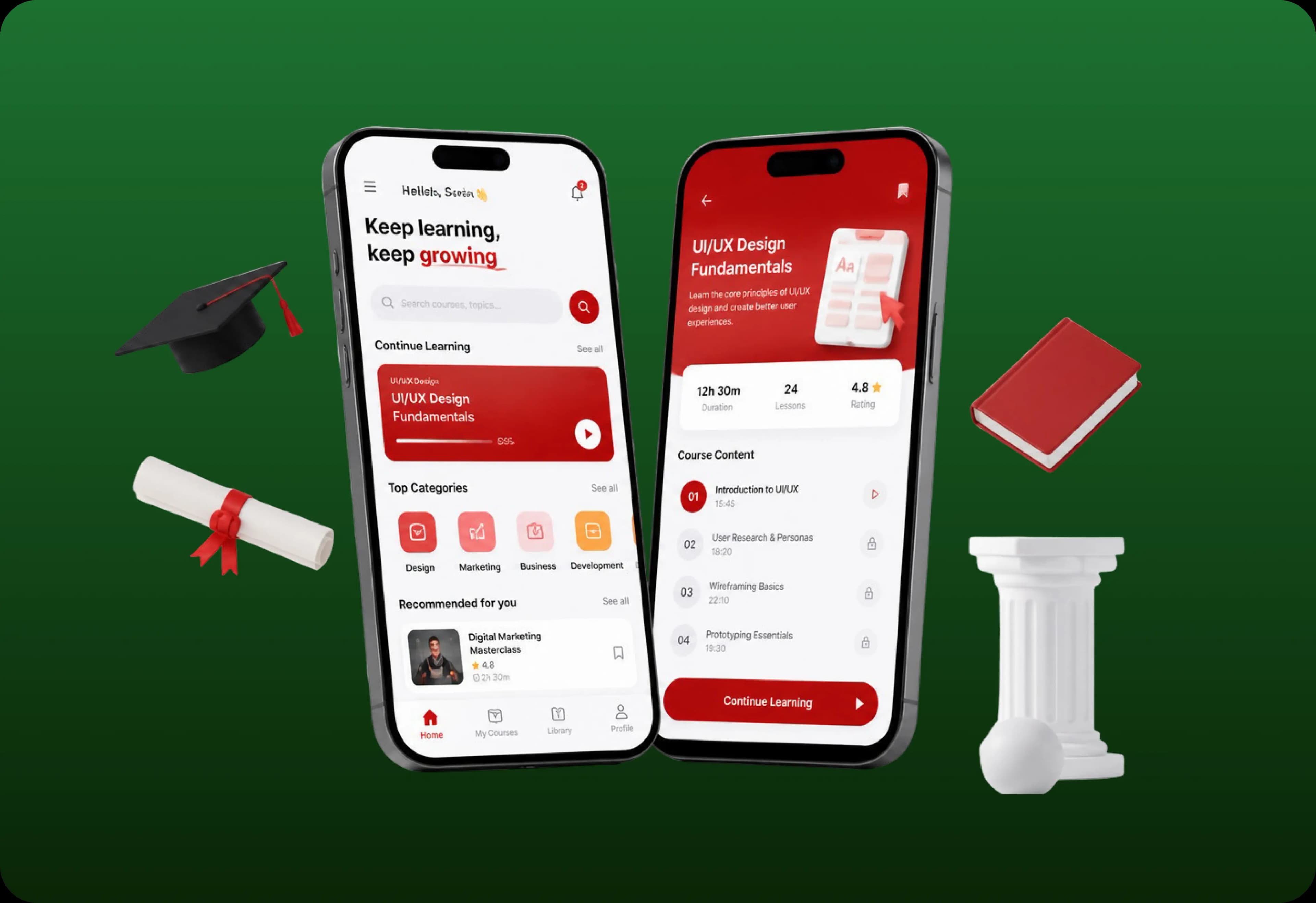
On mobile, we build learning apps that respect the real conditions students use them in — offline-capable, light, and consistent across iOS and Android — so engagement doesn't depend on perfect connectivity. Getting the learner's core loop (open, learn, progress, come back) to feel effortless on a phone is most of the retention battle, and it's the part a generic app shop underestimates.
Healthcare
Fintech & Banking
E-Commerce
Travel and Hospitality
Legal & Compliance
Logistics & Supply Chain
SaaS & Technology
How Moonstack approaches approaches education software development
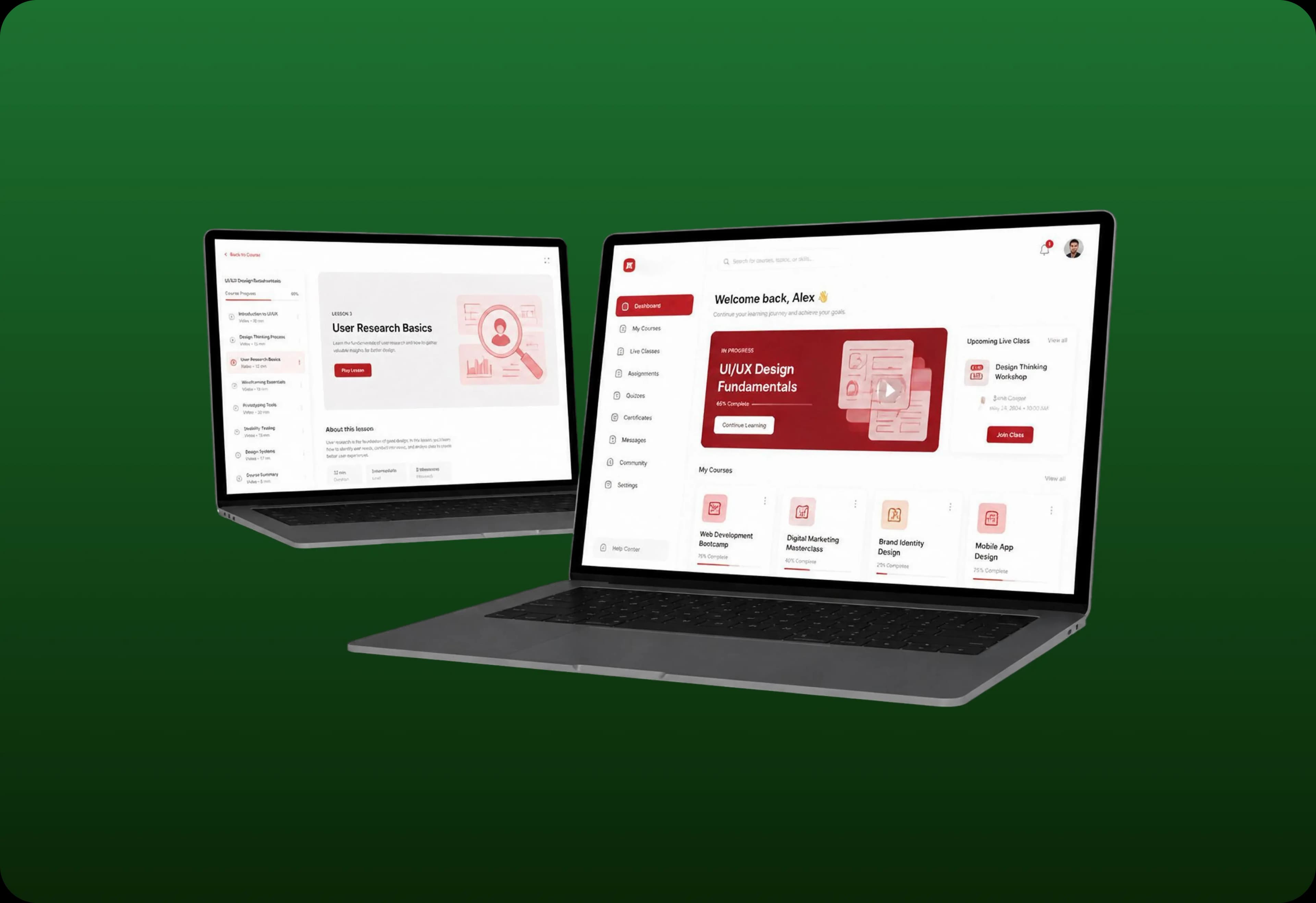
For education teams we focus on the two things that carry most of the sector's value: the e-learning web platform and the mobile learning app, built to work as one product. On the platform side, we design the learner, instructor, and admin experiences as distinct roles from the start — because an education product is really three products sharing a data model, and pretending otherwise is where the rework comes from. That's core web design and development work, extended with the education-specific pieces above: LTI/SIS integration, a mastery-tracking data model that makes personalization possible, and analytics instrumented for the efficacy questions buyers now ask. When the need is a robust, performant public platform and portal rather than a bespoke learning engine, that's squarely our website development practice.

Talk to us about your finance project
- Building secure payment products
- Developing wealth management platforms
- Creating digital lending solutions
- Integrating AI into finance workflows
- Connecting with payment rails and processors
- Ensuring PCI-DSS, SOC 2, RBI, and PSD2 compliance
- Keeping human oversight for critical money movements
- Designing secure and compliant financial systems
- Creating a tailored fintech implementation roadmap
Frequently Asked Questions.
Everything you need to know about our solutions