


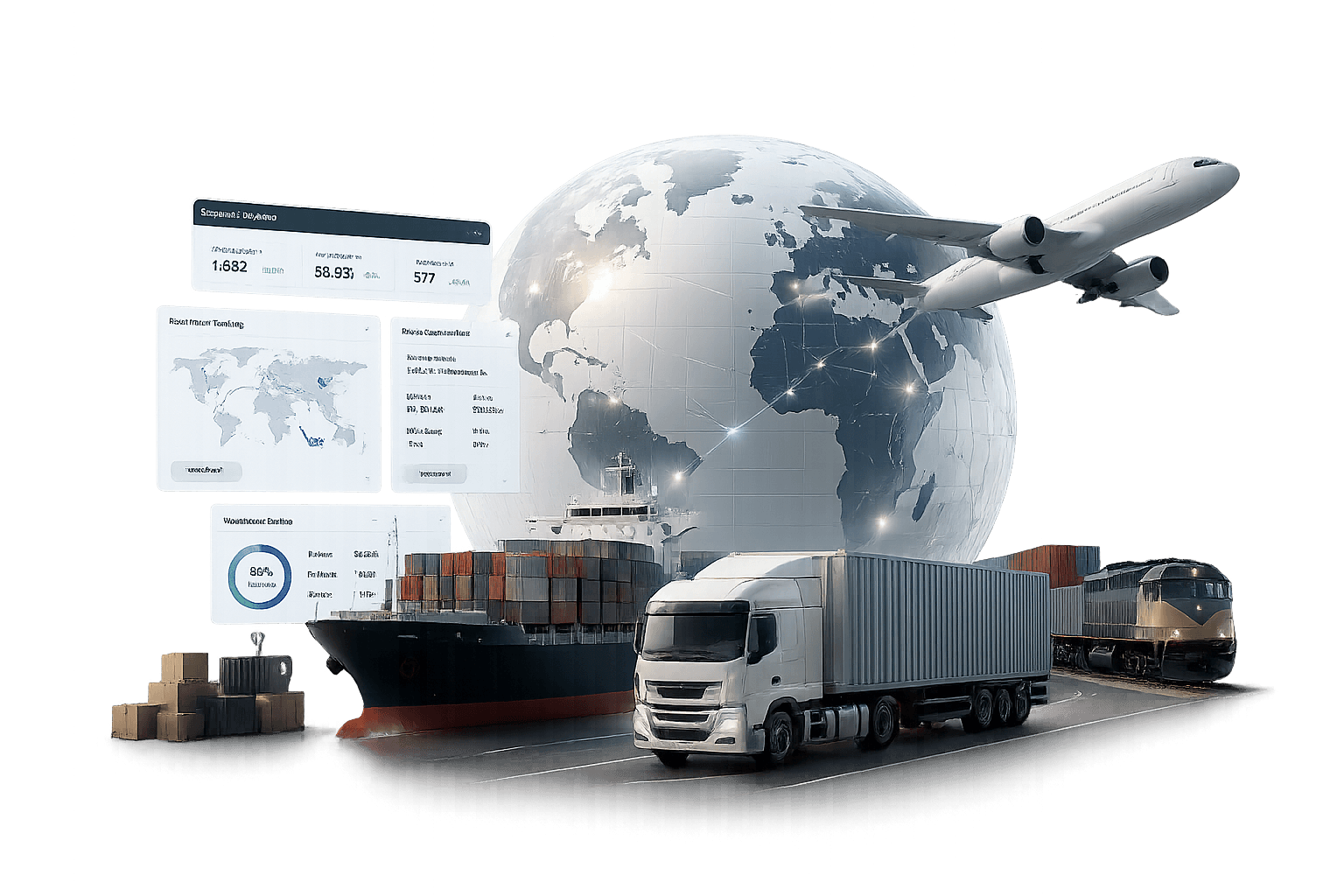

Why 2026 raises the bar on supply-chain technology technology
Automation
The first is agentic AI moving from dashboards to decisions. The last wave of supply-chain software showed you a problem — a delayed shipment, a stockout risk — and left you to act. In 2026 the expectation is software that acts: reroutes automatically, reorders before the shelf empties, flags and works an exception without a human babysitting it. But an agent is only as good as the data under it, so this raises the stakes on everything below: an AI that reroutes on stale positions makes confident, expensive mistakes.
Integration
The second, underweighted by generic vendors, is that the integration is the entire job. No logistics operation is greenfield — there's a TMS, a WMS, an ERP, carrier and customs systems, and decades of EDI (X12, EDIFACT) that isn't going away. The value of any new software is unlocked only when it exchanges data with these reliably. `Integrates with your TMS` on a brochure and a tested, fault-tolerant, real-time integration are very different amounts of work — and the second is where logistics projects succeed or quietly stall.

What actually changes when the data has to be live
Event-driven architecture, because polling doesn't scale
Real-time visibility isn't a page you refresh — it's a stream. The right shape is event-driven: updates from carriers, devices, and partner systems flow through a message queue (Kafka or similar), get processed idempotently so a duplicate GPS ping doesn't double-count, and update one source of truth. Build it as periodic batch polling and you get a system that's always a little behind at exactly the moments — a delay, a diversion — when being behind costs the most.
Freshness matched to the decision, not maxed out everywhere
Not everything needs sub-second updates, and pretending it does is how you burn a budget. A truck's position for a live-ETA promise might need minute-level freshness; a warehouse's slow-moving stock count doesn't. The engineering judgment is matching update cadence to how fast each decision actually moves — because stale data feeding a decision is genuinely worse than no data, since it looks authoritative while being wrong.
Predictive ETAs and route optimization that beat a naive estimate
`Distance ÷ average speed` is not an ETA anyone should trust. Real predictive ETA blends live position, historical lane performance, traffic, and dwell-time patterns — and route optimization has to respect real constraints (time windows, vehicle capacity, driver hours), which is a genuine optimization problem, not a nearest-first sort. This is exactly where AI earns its keep, provided it's grounded in your real operational data — the retrieval-grounded and agent-in-your-systems approach rather than a model guessing.
Reliability, because logistics doesn't get a maintenance window.
Freight moves at 3am, on holidays, across time zones. A visibility platform that's down is worse than no platform, because operations have come to depend on it. That means designing for uptime, graceful degradation when a carrier feed goes dark, and data integrity across every handoff — the discipline of making sure timely, reliable data feeds each decision, because in logistics a missed signal is a missed truck.
Logistics & Supply Chain Case Studies

A clearer way for clients to explore advisory services and investment solutions.
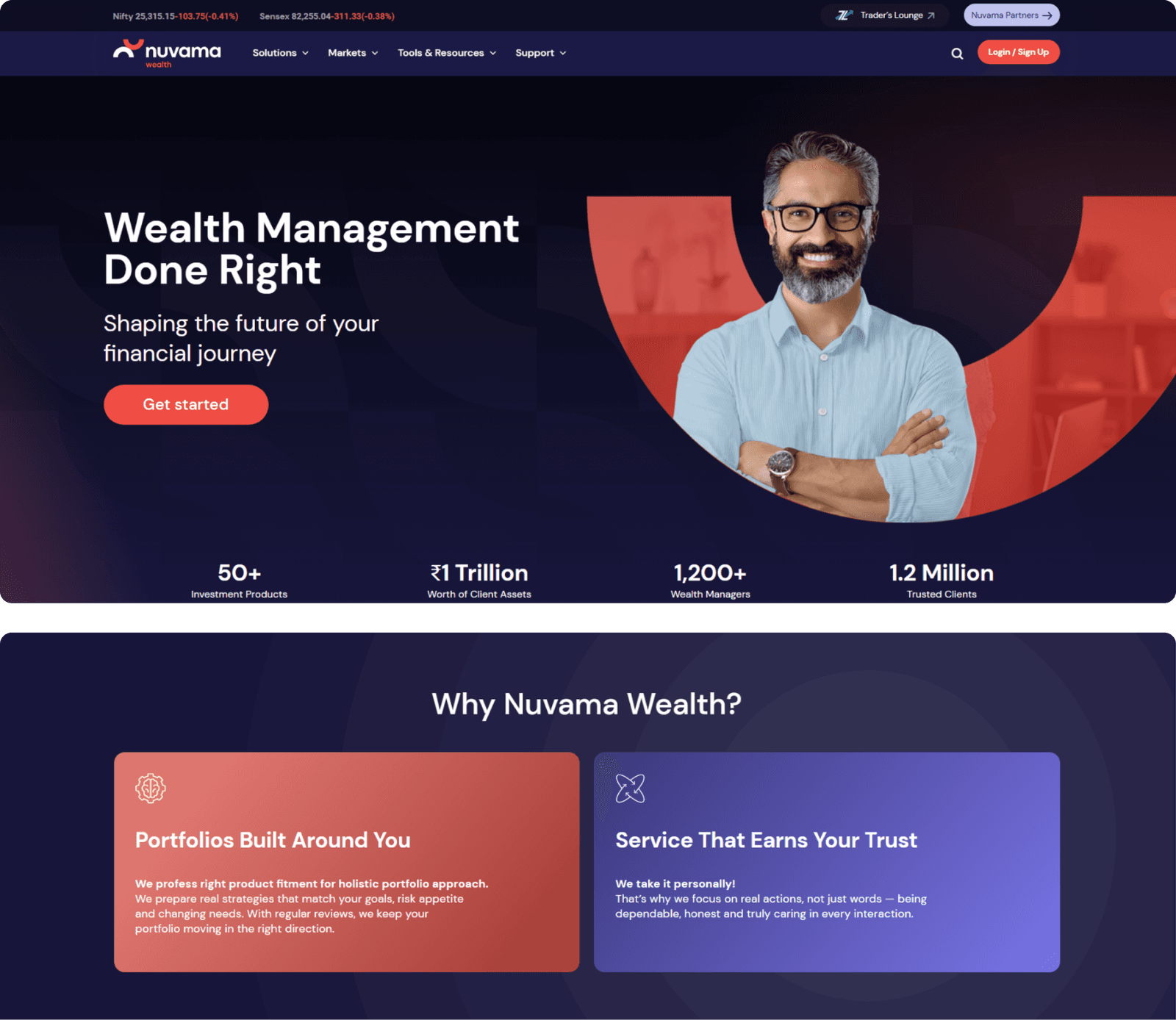
What we did for Nuvama Wealth
 Structured service architecture for advisory offerings
- Separate advisory and portfolio sections
- Research listings organised for quick scanning
- Clear adviser contact routes on every page
- Office network presented by region
- Responsive layouts across desktop and mobile

Presenting a full spend management and payments suite to Indian finance teams.
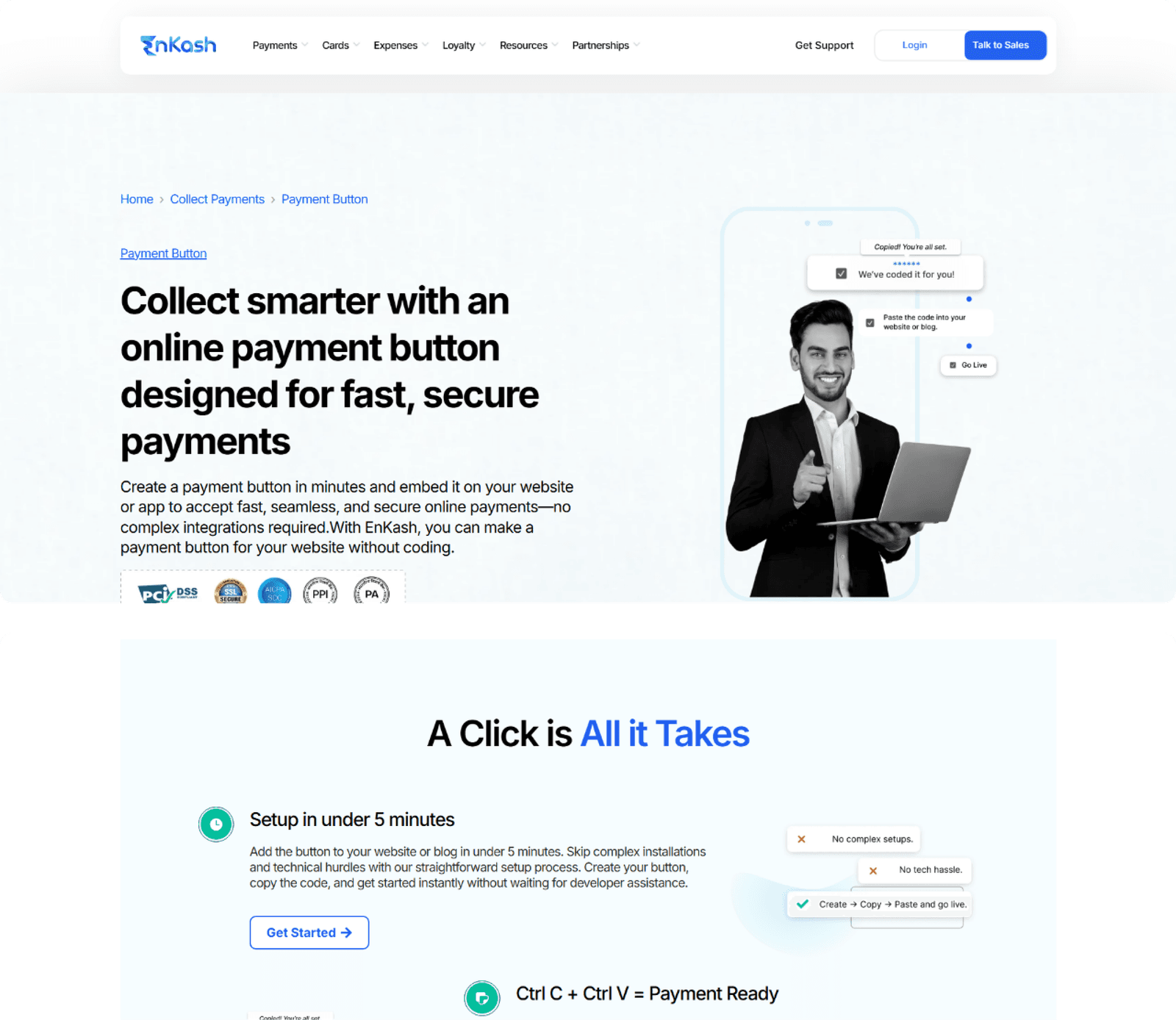
What we did for Enkash
- Product suite split into separate pages
- Solution routes organised by business role
- Corporate cards and expense pages structured clearly
- Payables and collections given dedicated sections
- Demo requests reachable from every screen
- Responsive layouts across desktop and mobile
Logistics supply chain Solutions Built for Your Industry
Our generative AI development services are not one-size-fits-all. We build industry-specific solutions that account for the compliance requirements, data structures, user expectations, and competitive dynamics of your market.
Healthcare
Fintech & Banking
E-Commerce
Travel and Hospitality
Education and EdTech
Legal & Compliance
SaaS & Technology
How Moonstack approaches logistics software development
For logistics and supply-chain teams we focus on the visibility-and-decision layer, with mobile and AI as the pieces on top.On the platform side, we build control-tower dashboards and tracking platforms on real-time, event-driven foundations, with the reliable TMS/WMS/ERP/carrier integrations underneath — core web design and development work extended with the logistics non-negotiables: event ingestion, one current source of truth, and freshness matched to the decision. On AI, we add exception-handling and optimization agents grounded in your live operational data — with citations and a human checkpoint where a decision carries real cost, the production-grounded AI approach rather than a black box. And on mobile, we build driver, warehouse, and field apps (one React Native codebase across iOS and Android) that stay usable on patchy connectivity — offline-capable, syncing when the signal returns.
.1v6kp-9wo0z2k.webp&w=3840&q=75)
.0kbl4122ev1qn.webp&w=3840&q=75)

Talk to us about your logistic supply chain project
- Build supply-chain visibility.
- Modernize TMS and WMS.
- Add AI for exceptions and ETAs.
- Integrate carrier feeds and systems.
- Use real-time operational data.
- Enable safe automation.
- Improve logistics efficiency.
- Deliver a practical implementation plan.
Frequently Asked Questions.
Everything you need to know about our solutions