




Why 2026 forces retail to be one system, not two
Inventory
The first is one true view of inventory becoming non-negotiable. Buy-online-pickup-in-store, ship-from-store, reserve-and-collect, endless-aisle — every one of these fulfillment options a customer now expects depends on knowing, accurately and in real time, how many units sit at each location. The moment your online channel and your point-of-sale disagree, you either oversell (a cancelled order and a lost customer) or you hide sellable stock (lost revenue). A single, real-time inventory source of truth across channels is the foundation everything else sits on.
Personalization
The third, treated as a footnote by generic vendors, is that the customer expects to be recognized everywhere. The same shopper who browses on the app, buys in-store, and returns online expects you to know it's them each time — loyalty, history, preferences. That's a unified customer profile problem, and if your POS, your e-commerce platform, and your loyalty system each hold a different fragment of the person, `personalization` is a slide, not a capability.

What actually changes when store and online are one system
Real-time inventory sync that survives the race condition
The defining omnichannel problem is concurrency: the last unit can be bought online and sold at the register in the same few seconds. Solving it means a real-time inventory system with atomic stock decrements and an available-to-promise layer that reserves stock the instant an order is placed — not a nightly batch sync that guarantees you'll oversell during peak. This is the same correctness-under-concurrency discipline that decides whether a platform holds up, and it's the core engineering job in retail, not a feature.
Integration with the systems the store already runs
A retailer isn't a greenfield — there's a POS (Lightspeed, Square), often an ERP, a payment processor, and a loyalty system. The value of new software is unlocked only when it exchanges data with these reliably. `Integrates with your POS` on a brochure and a tested, reconciling, real-time integration are very different amounts of work — and the second is where retail projects succeed or quietly stall. This is exactly the territory where AI agents connected to CRM, ERP, and retail systems earn their keep, automating the operational glue between them.
Order orchestration across locations
Once you can fulfill from any store or a warehouse, every order needs routing logic: which location ships or fulfills this, based on stock, distance, and cost. A naive `nearest store` rule strands inventory and blows delivery promises; real order-management logic is what makes ship-from-store profitable instead of chaotic.
Speed and a grounded assistant on the storefront
The customer-facing site still has to be fast — a retail site that misses Core Web Vitals (Largest Contentful Paint under 2.5s) loses shoppers before a product renders — and where AI helps customers (`is this in stock at my local store, what's your return policy`), it has to be grounded in your real inventory and policies, the retrieval-grounded approach behind production AI assistants, not a bot that invents an answer and creates a store dispute.
Retail Case Studies

A clearer way for clients to explore advisory services and investment solutions.
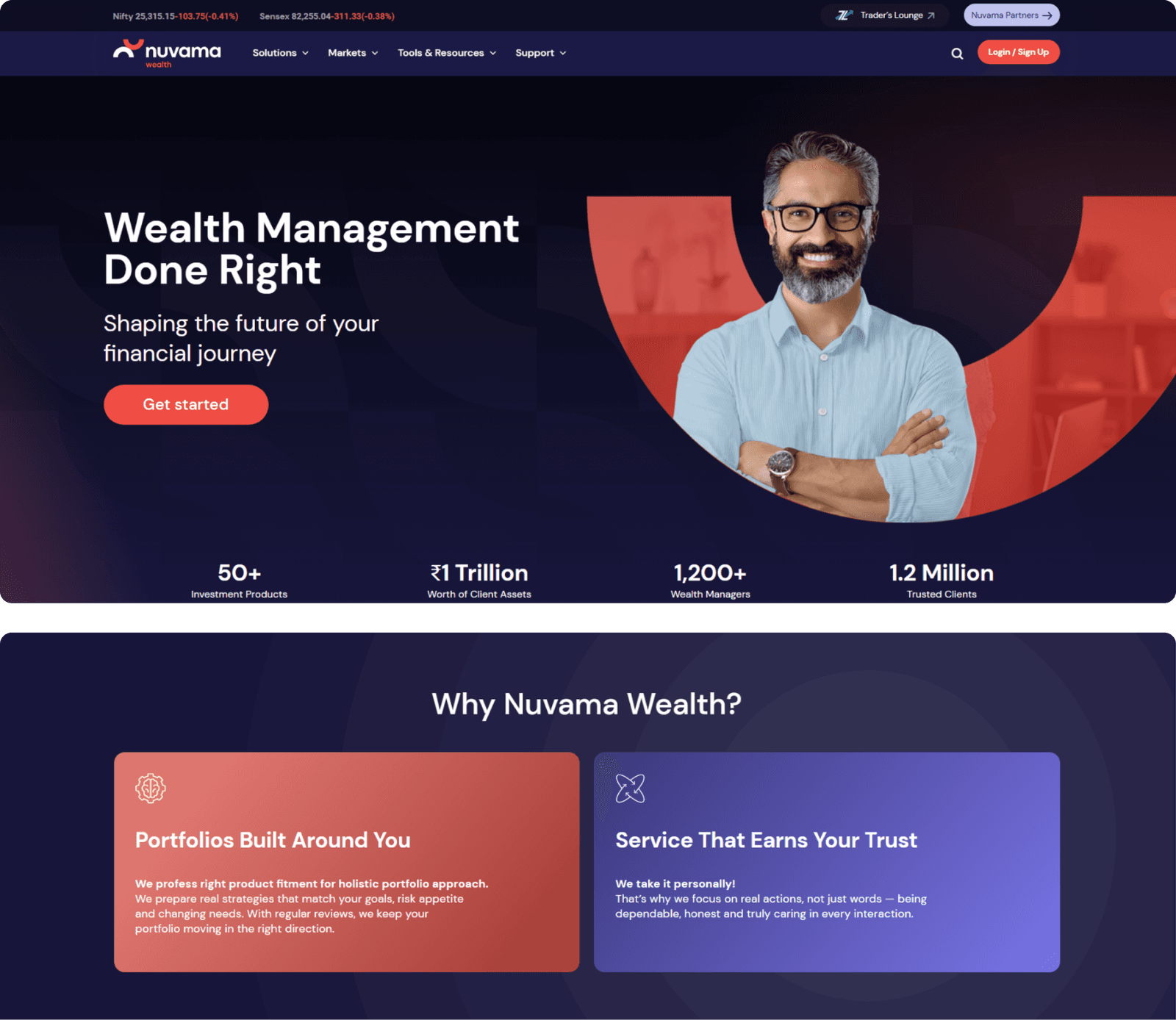
What we did for Nuvama Wealth
 Structured service architecture for advisory offerings
- Separate advisory and portfolio sections
- Research listings organised for quick scanning
- Clear adviser contact routes on every page
- Office network presented by region
- Responsive layouts across desktop and mobile

Presenting a full spend management and payments suite to Indian finance teams.
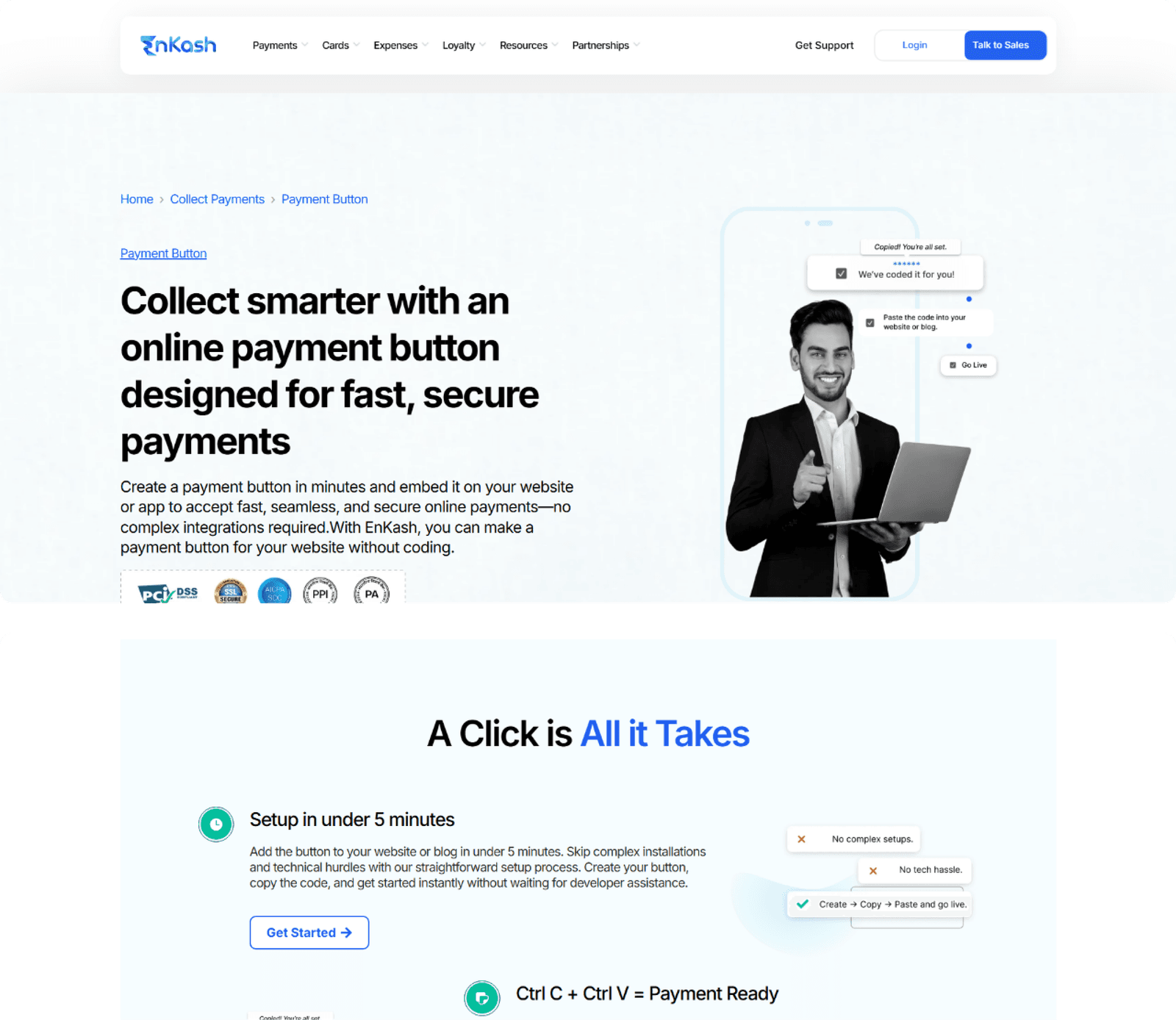
What we did for Enkash
- Product suite split into separate pages
- Solution routes organised by business role
- Corporate cards and expense pages structured clearly
- Payables and collections given dedicated sections
- Demo requests reachable from every screen
- Responsive layouts across desktop and mobile
Finance Solutions Built for Your Industry
Our generative AI development services are not one-size-fits-all. We build industry-specific solutions that account for the compliance requirements, data structures, user expectations, and competitive dynamics of your market.
Healthcare
E-Commerce
Travel and Hospitality
Education and EdTech
Legal & Compliance
Logistics & Supply Chain
SaaS & Technology
How Moonstack approaches retail software development
For multi-location retailers we focus on the connective tissue — the platforms and integrations that make store and online one system — with mobile and AI as the layers on top. On the platform side, we build customer-facing retail sites and the integration layer beneath them: real-time inventory sync, POS/ERP connectivity, and order orchestration, engineered for correctness under concurrent demand. That's core web design and development work extended with the omnichannel non-negotiables. On AI, we add demand forecasting and grounded customer assistants that draw on one clean data model. And on mobile, we build retail and loyalty apps (one React Native codebase across iOS and Android) that carry the same unified customer profile the web and store use — so a shopper is recognized wherever they are.
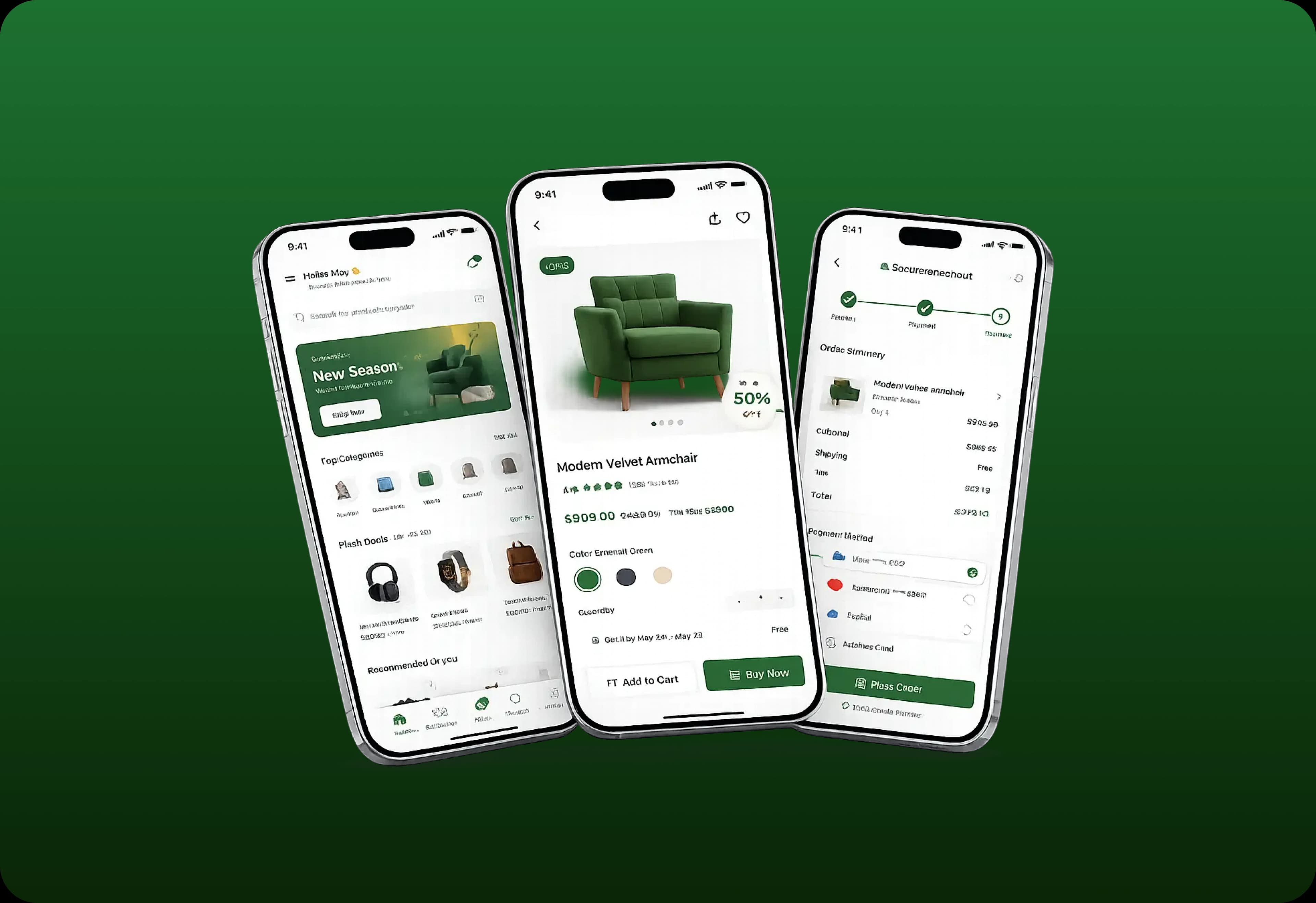
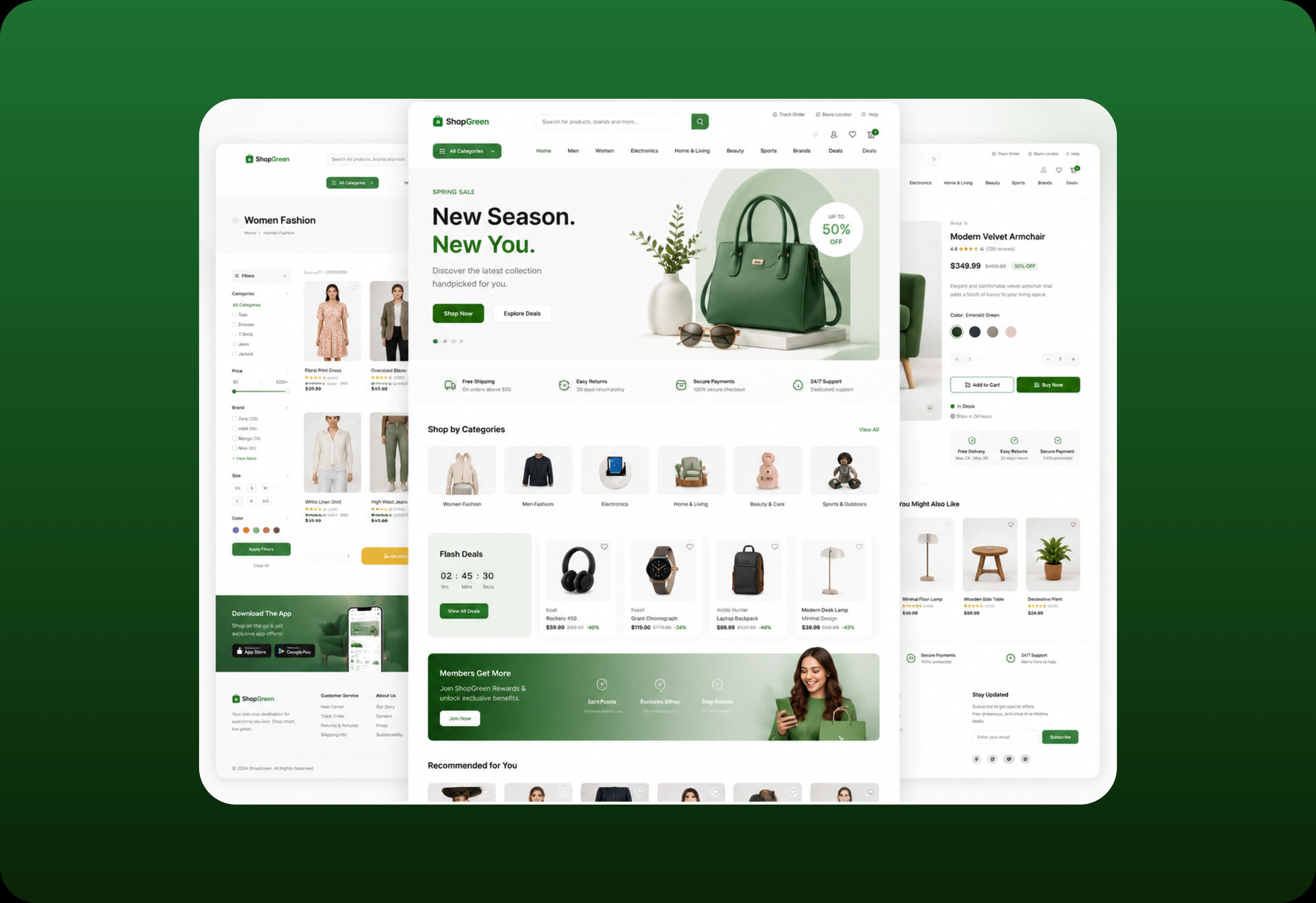

Talk to us about your retail project
- Unify your physical stores and online sales channels into retail ecosystem.
- Eliminate inventory overselling with accurate.
- Leverage AI for demand forecasting customer experiences.
- Integrate with your existing POS and ERP systems.
- Support omnichannel fulfillment, ship-from-store.
- Maintain accurate inventory counts across every sales channel .
- Create a unified retail system that customers can trust.
Frequently Asked Questions.
Everything you need to know about our solutions