


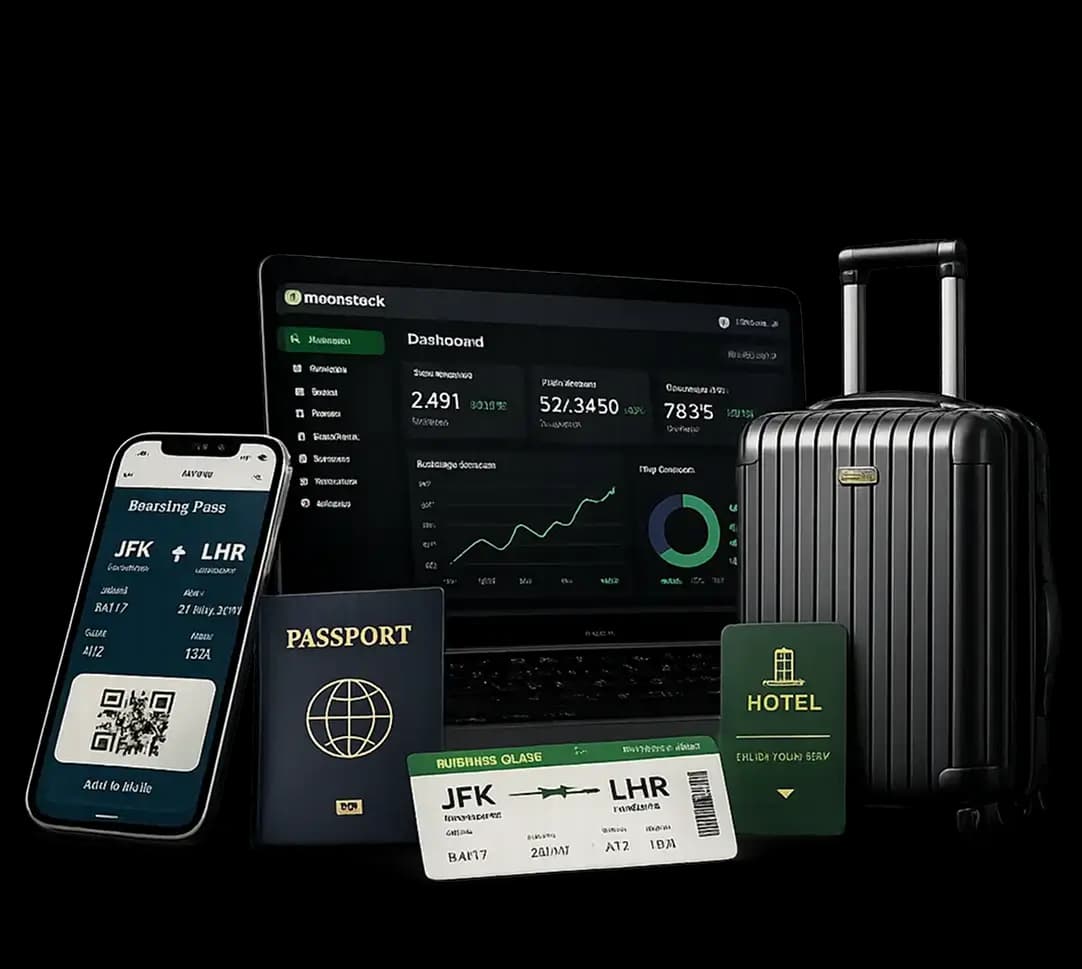

Why 2026 is a real turning point for travel technology 2026
Agentic
The first, and the biggest, is agentic AI changing how trips get booked. 2026 is the year AI assistants started planning and booking travel on a traveler's behalf — `book me a hotel near the conference under ₹8,000 with free cancellation.` That shifts the ground under every operator: if your inventory, rates, and policies aren't exposed as clean, structured data (schema.org markup, a well-formed availability API), an AI agent can't read you, and you become invisible in exactly the channel discovery is moving toward. The winners will be the properties and platforms an agent can actually parse and book.
Integration
The second, treated as a footnote by generic vendors, is that the integration is the product. Hospitality runs on a stack of systems — a property management system (Opera, Cloudbeds), a channel manager, GDS connectivity (Amadeus, Sabre), OTA links (Booking.com, Expedia), a payment gateway. The value of your software is unlocked only when these agree in real time. `Integrates with your PMS` on a brochure and a tested, reconciling, real-time sync are very different amounts of work — and the second is where projects succeed or quietly stall.

What actually decides whether a hospitality build works
Real-time availability that never oversells
The defining hospitality problem is that the same room or seat must not be sold twice, even when two people book in the same second across two channels. That's a concurrency problem, solved with locking or atomic reservation transactions and idempotent booking operations — not an afterthought you bolt on. An overbooked guest arriving to no room is the failure this industry never forgets, so correctness under concurrent booking load is the core engineering job, not a nice-to-have.
Speed, because a slow booking flow is an abandoned one
Travelers comparison-shop with a dozen tabs open; a booking site that misses Core Web Vitals (Largest Contentful Paint under 2.5s, Interaction to Next Paint under 200ms) loses them before the room even renders. Performance here is revenue, and it comes from the build — lean pages, optimized media, a fast critical path — not a plugin added later.
A grounded AI concierge, not a hallucinating chatbot
AI belongs in hospitality — answering `what's the cancellation policy,` `is late checkout available,` `what's near the hotel` — but only when it's grounded in your real policies, availability, and property data. A concierge bot that invents a pet policy or a rate creates a front-desk dispute, not a saved call. The right pattern is retrieval-augmented generation over your actual content, so the answer cites your real policy — the same retrieval-grounded approach behind production AI chatbots, and the discipline behind putting AI agents into booking and operational systems.
Reliability at peak, because peak is the whole business.
Travel demand is spiky by nature — a flash sale, a festival, a long weekend. A platform that's fine on a Tuesday and buckles when a promotion lands has failed at the exact moment that pays for the quarter. That means caching, queueing, and booking flows that stay correct under a surge of concurrent traffic.
Hospitality work we've delivered

A clearer way for clients to explore advisory services and investment solutions.
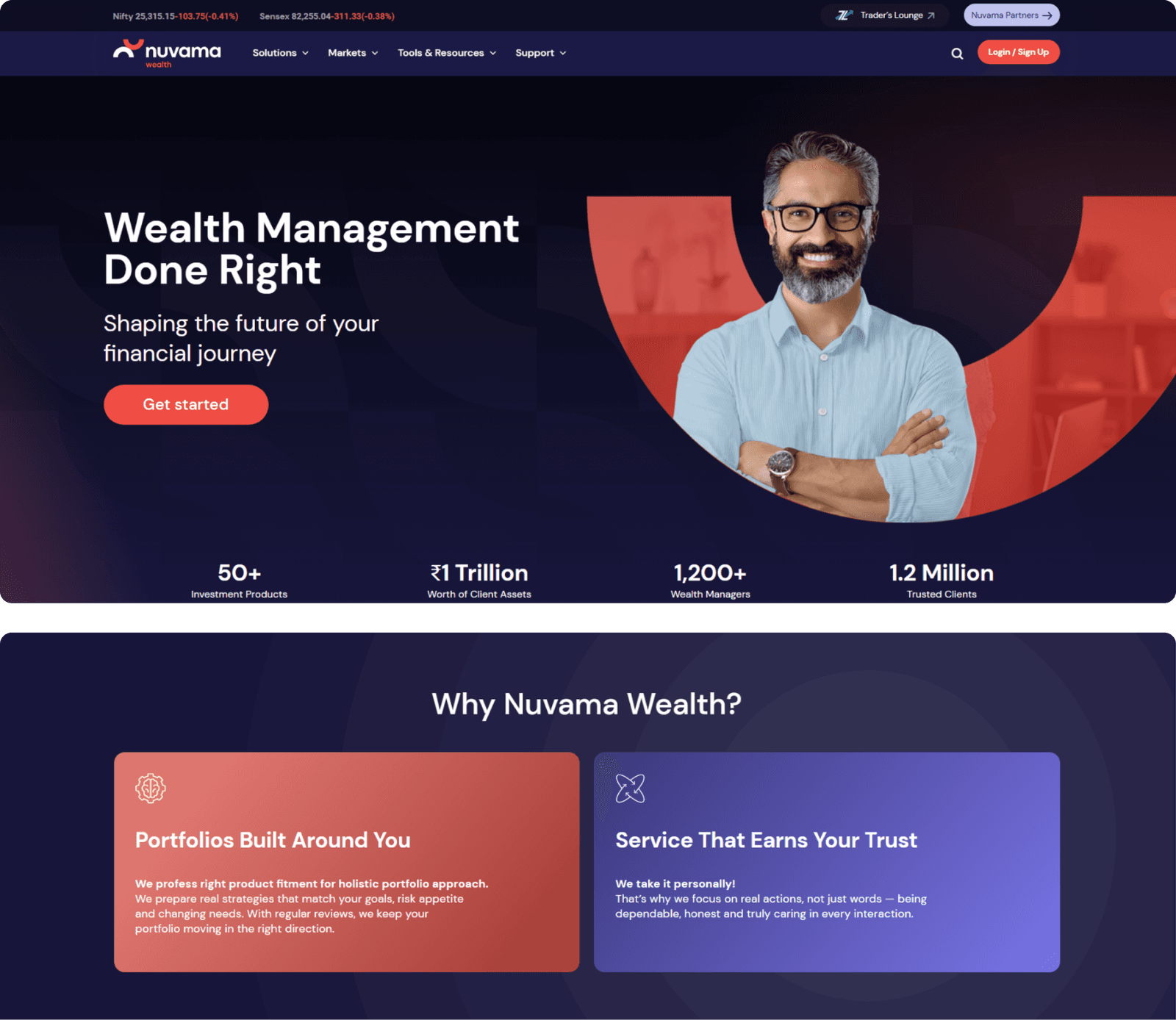
What we did for Nuvama Wealth
 Structured service architecture for advisory offerings
- Separate advisory and portfolio sections
- Research listings organised for quick scanning
- Clear adviser contact routes on every page
- Office network presented by region
- Responsive layouts across desktop and mobile

Presenting a full spend management and payments suite to Indian finance teams.
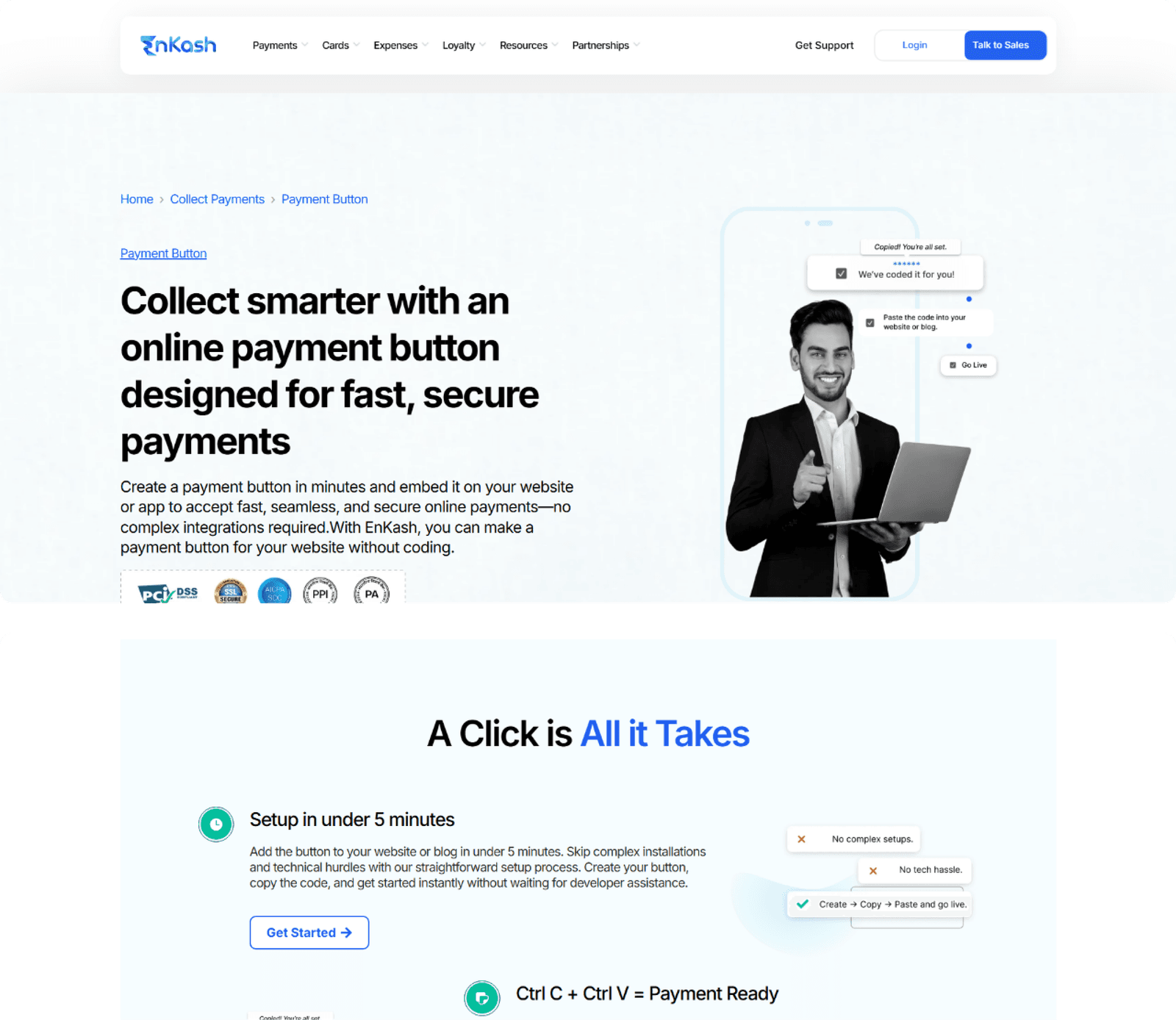
What we did for Enkash
- Product suite split into separate pages
- Solution routes organised by business role
- Corporate cards and expense pages structured clearly
- Payables and collections given dedicated sections
- Demo requests reachable from every screen
- Responsive layouts across desktop and mobile
Education Solutions Built for Your Industry
On mobile, we build learning apps that respect the real conditions students use them in — offline-capable, light, and consistent across iOS and Android — so engagement doesn't depend on perfect connectivity. Getting the learner's core loop (open, learn, progress, come back) to feel effortless on a phone is most of the retention battle, and it's the part a generic app shop underestimates.
Healthcare
Fintech & Banking
E-Commerce
Legal & Compliance
Logistics & Supply Chain
SaaS & Technology
How Moonstack approaches hospitality software development
For travel and hospitality brands we focus on the guest-facing platform and the discovery-and-service layer, with mobile as the natural extension. On the platform side, we build booking-capable sites, property and restaurant platforms, and guest portals engineered for real-time availability and speed — core web design and development work, extended with the hospitality non-negotiables: overbooking-safe reservation logic, PMS/channel integration, and Core Web Vitals as a target from sprint one. On AI, we add concierge and booking assistants grounded in your real policies and inventory. And on mobile, we build guest apps (one React Native codebase across iOS and Android) for the itinerary, the mobile key, the loyalty layer — because for a returning guest, a fast app is the relationship.
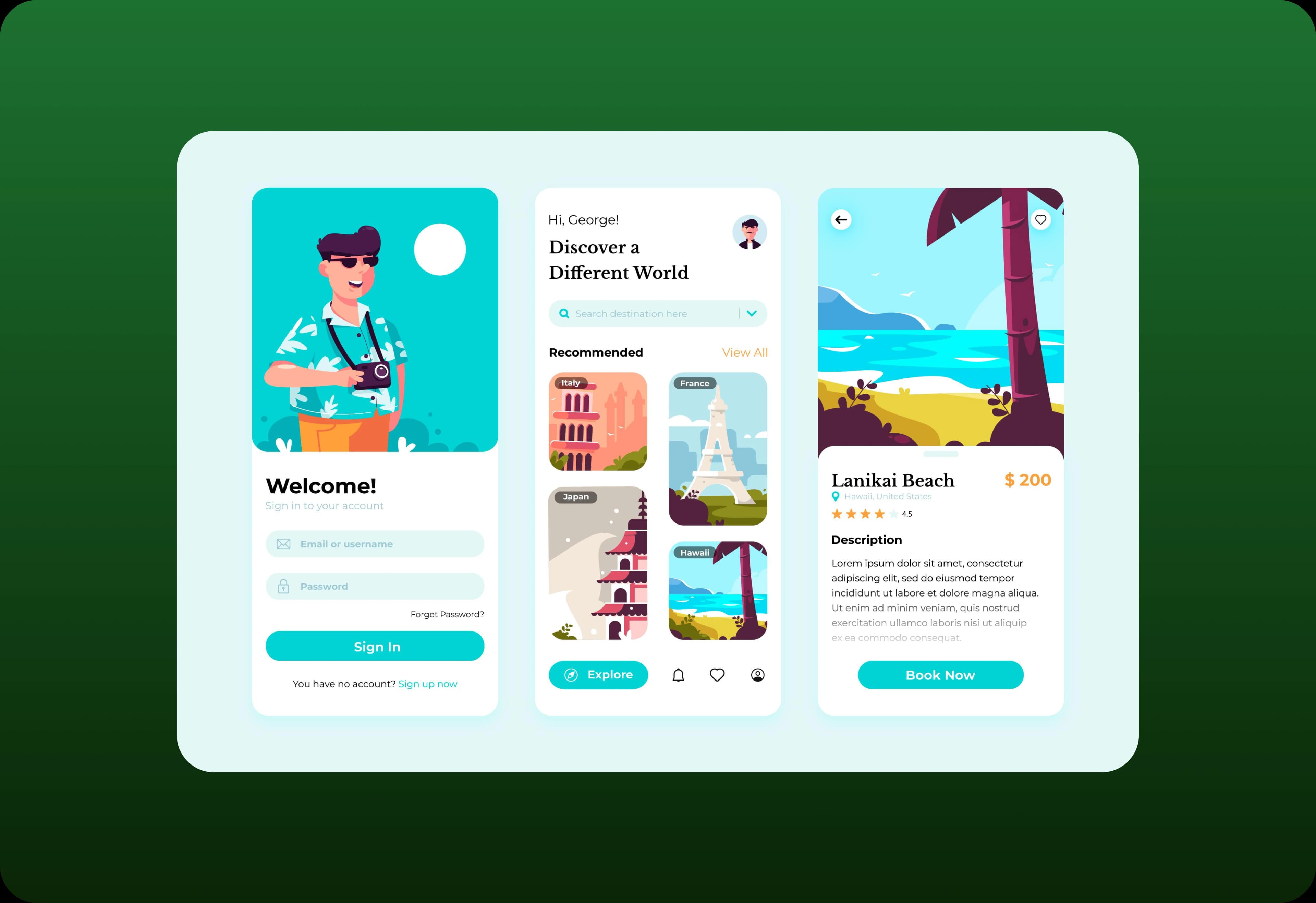
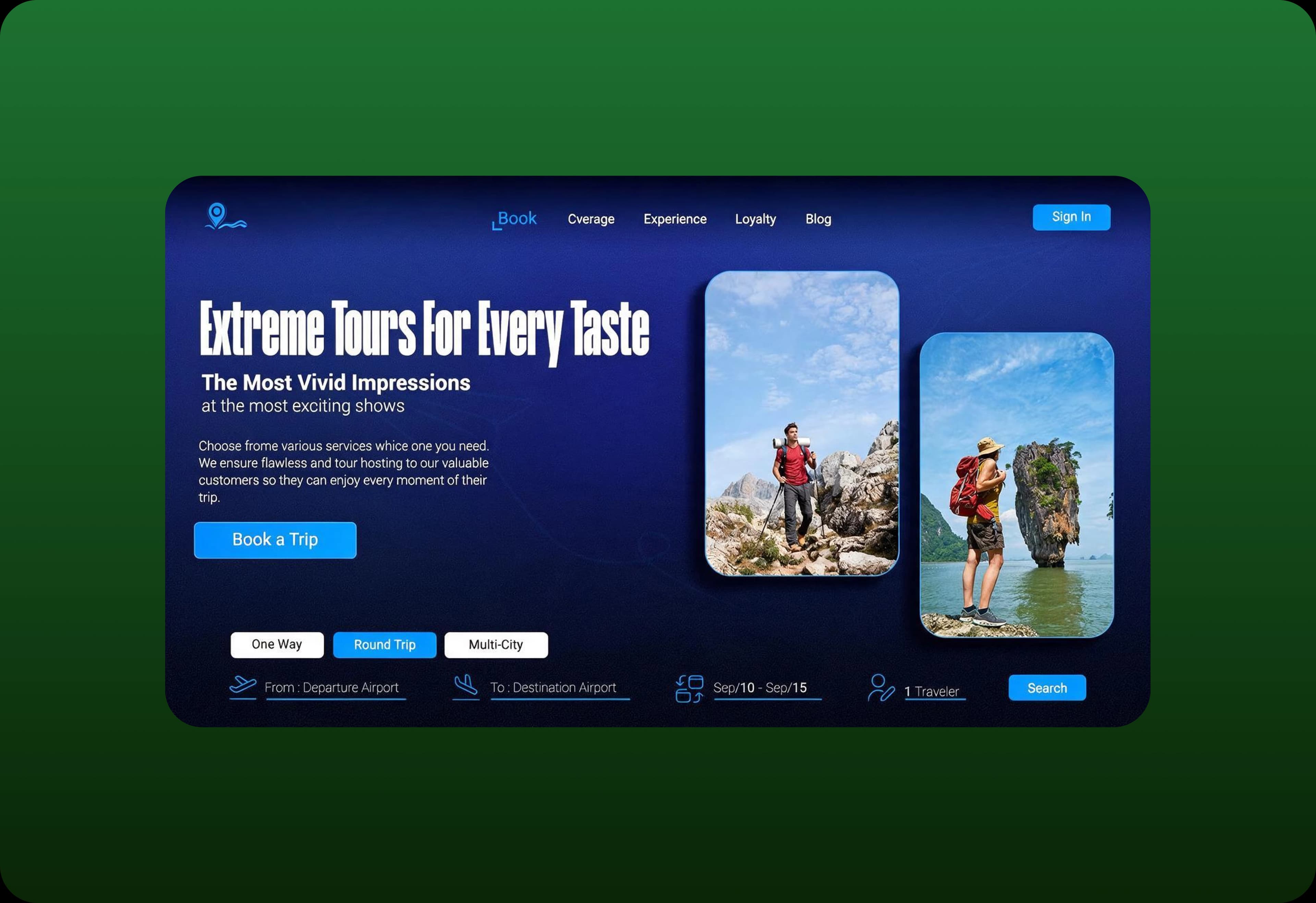

Talk to us about your traval and hospitality project
- Building a booking platform tailored to your business needs.
- Modernizing your property's digital guest experience.
- Adding AI to improve how travelers discover your property.
- Integrating with your existing PMS, channel manager.
- Ensuring your property remains bookable by AI travel agents.
Frequently Asked Questions.
Everything you need to know about our solutions